
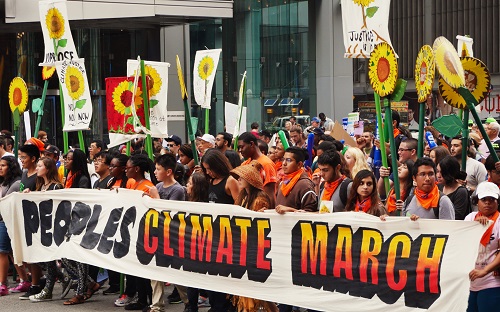
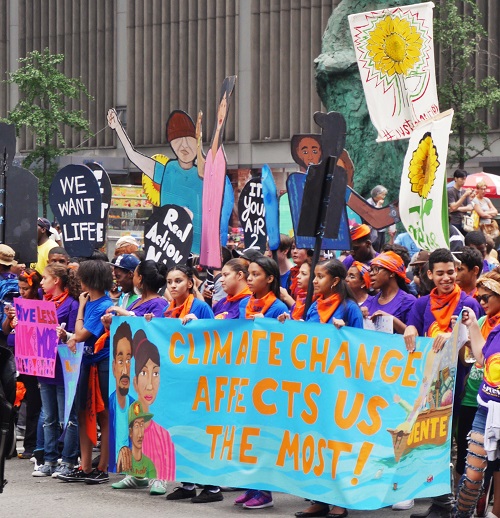
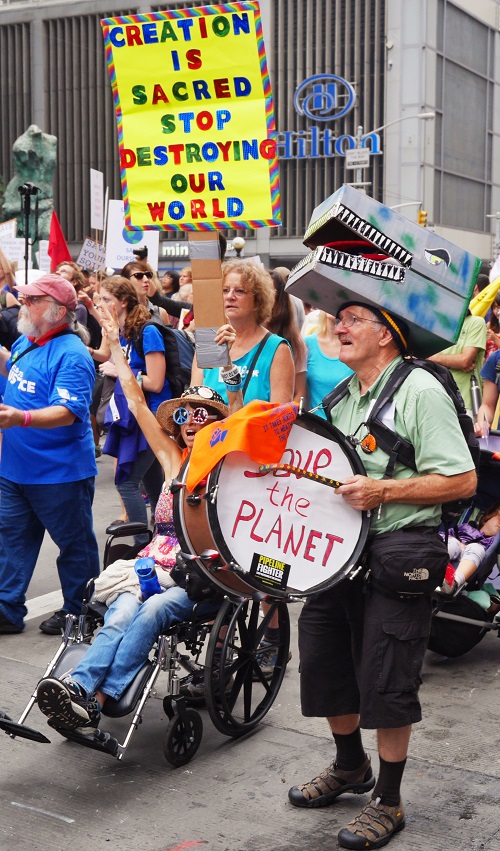
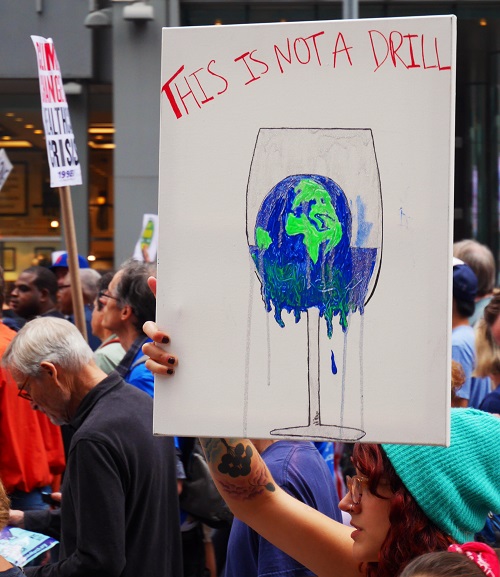
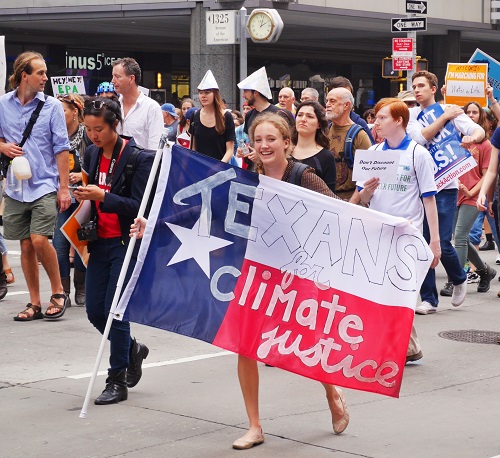
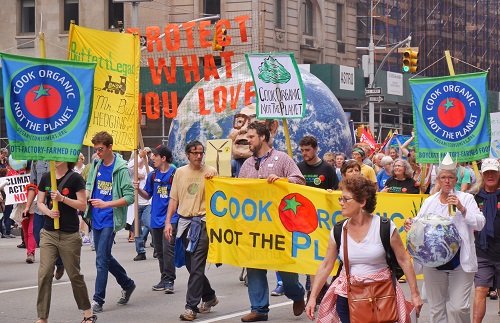
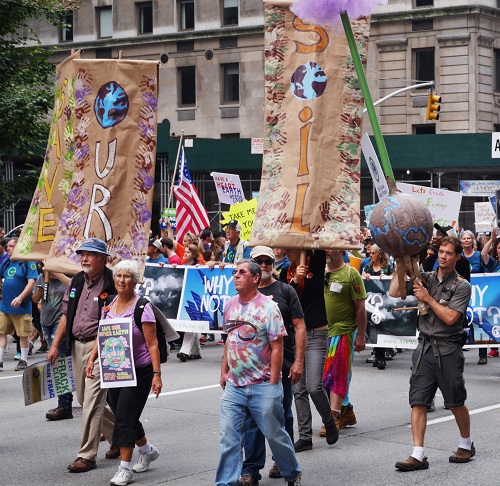
I am in New York for Climate Week, which includes the UN Climate Summit on Tuesday. Sunday saw an enormous turnout for the People’s Climate March as can be seen from a few of my pictures below.



David Hone – Chief Climate Change Advisor for Shell
I am in New York for Climate Week, which includes the UN Climate Summit on Tuesday. Sunday saw an enormous turnout for the People’s Climate March as can be seen from a few of my pictures below.
In my most recent post outlining ten reasons why the global 2° C goal is more difficult than most commentators imagine, I referenced a new MIT report, Expectations for a New Climate Agreement, which looks at the prospects for the expected Paris COP21 agreement actually changing the current global emissions pathway. The findings don’t give a lot to be hopeful about, but nevertheless are worthy of further review.
The work has been carried out by the MIT Joint Program on the Science and Policy of Global Change, a unique coming together of disciplines ranging from atmospheric chemistry to macro-economics, all under one roof. The team has developed considerable modelling expertise, which also combines the aforementioned disciplines to allow policy feedback to impact emissions and therefore the climate model itself. For the sake of transparency, Shell is a sponsor of the Joint Program.
The first stumbling block the researchers hit in trying to assess what Paris might deliver was the current lack of detail or even a basic outline of the scope of the deal; this with just 15 months to go. While it is now widely assumed that COP21 will deliver a bottom up agreement based on contributions at a national level, there is almost no information available on accounting periods, review options, the nature of a contribution (e.g., reduction quantity, mitigation action, adaptation effort, financial aid, capacity building, technology transfer, R&D effort), terms of compliance, extension provisions and so on. Rather, all this had to be assumed, with the consequence of considerable uncertainty around the MIT findings. For example, MIT focus on a target date of 2030 for the first round of contributions, but continue the simulation of the effects of assumed contributions through to 2050.
A reference case is presented which sits within the RCP 8.5 range, the equivalent of atmospheric concentrations of CO2 exceeding 1000 ppm over the long term. This represents a 4+°C scenario by the end of the century.
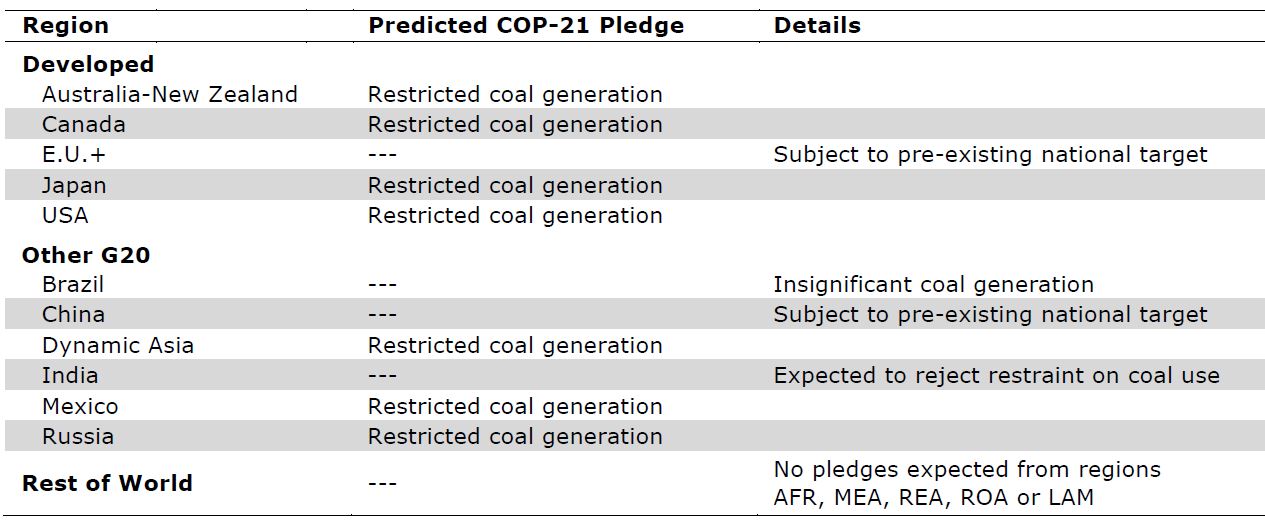
Electricity generation is the single largest emitting sector in most countries and therefore features first in the resulting analysis. The MIT team argue that the majority of policy effects on emissions can be covered with just two options: controls on coal-fired generation and renewable energy mandates. In the case of coal, various regions and countries are assumed to pledge restrictions in coal generation, as outlined in the table below. Crucially though, large future users such as India are not expected to make a pledge of this type.
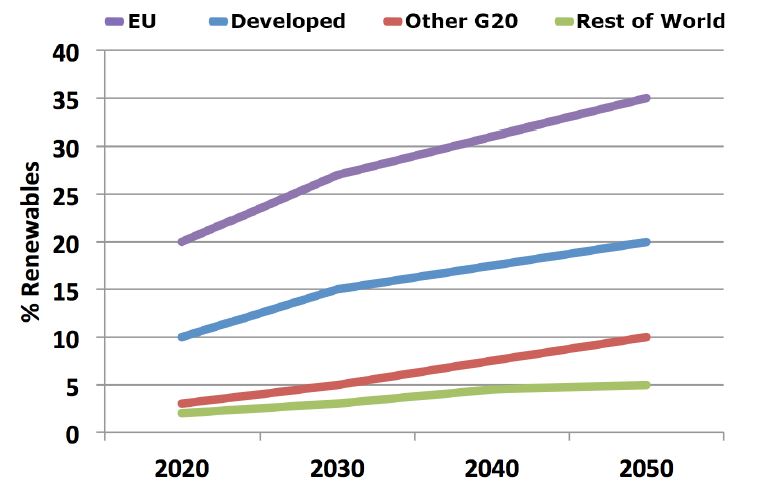
Renewable energy is also expected to grow strongly, with the EU reaching a 35% share in electricity generation by 2050, with other regions following, albeit not as aggressively.
In the transport sector, efficiency is the trend to watch, with vehicle efficiency improving by 2% per annum from 2020 in developed countries and by 1% per annum in the rest of the world. Similarly, in the commercial transport sector, a constant focus on efficiency in trucking fleets sees emissions between 10 and 20% lower than the reference case by 2050. However, the sector remains oil based for the entire period.
Efficiency is also the major driver in reducing household emissions from the reference case, with developed countries leading the way and achieving a 20% differential by 2050. However, for other parts of the world this falls to as low as a 5% improvement over 30 years.
Significant improvements are also assumed for land use change emissions and methane emissions.
The effect of all this is noticeable, but growth in global emissions still continues through to 2050, although at a slower pace than the reference scenario. MIT have 2050 CO2-eq emissions at about 71 Gt, vs. their estimate of 56 Gt in the year of the agreement, i.e. 2015. This outcome is compared with two other projections in the figure below. One is the Reference case used throughout this analysis. Also shown, for comparison purposes, is their estimate of emissions to 2050 if commitments made in Copenhagen are met in 2020 and sustained thereafter. By this analysis, the expected contributions from current negotiations will bring the nations part way toward an RCP 4.5 pathway (a median global temperature increase of 1.8°C over this century or about 2.6°C above the pre-industrial level) but will also leave much to be done in subsequent efforts.
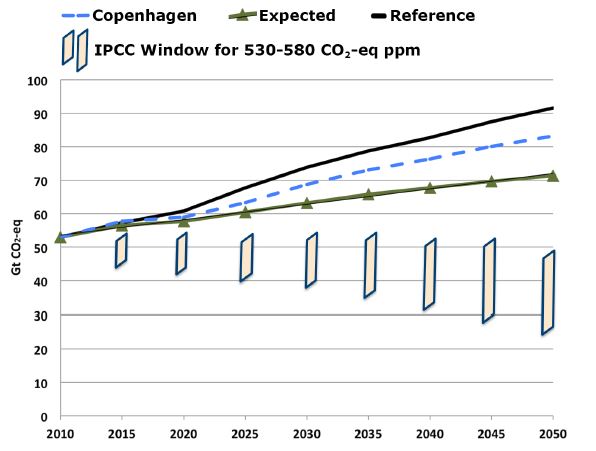
The issue of subsequent efforts and the nature of any review process is where the MIT analysis carries its starkest warning. The paper notes that if an agreement is reached in 2015, going into effect by 2020, the earliest review of performance along the way might not be before 2025. In this case, an effort to formulate the next agreement under the Climate Convention, or a tightening of COP-21 agreements, would not start until 2025 or after, with new targets set for a decade or more after that. If this expectation is correct, then global emissions as far out as 2045 or 2050 will be heavily influenced by achievements in the negotiations over the next 18 months.
Finally, the analysis calls for a common pricing regime as a preference to individual national actions conducted in isolation. The benefit here is a simple one, a lower overall cost for the global economy. Alternatively, for the same cost, greater ambition could be realized.
Based on the MIT work it would appear that negotiators and their national governments still have a long way to go to be able to say that they have a deal and set of actions that is effectively dealing with anthropogenic warming of the climate system.
A recent story in The Guardian expressed some optimism that “humans will rise to the challenge of climate change”. Ten reasons were given to be hopeful, but not one of them mentioned the climate basics such as a carbon price or carbon capture and storage. Rather, the offerings were largely tangential to the reality of rising CO2 emissions, with the hope that because European homes are using less energy and solar prices are dropping, then ipso facto, atmospheric CO2 levels would somehow stabilize (i.e. annual CO2 emissions falling to zero). Without wanting to be pessimistic, but rather realistic, it may not be the case that emissions just fall and here are ten reasons why not. For those who visit this blog more regularly, sorry for the repetition, but hopefully this is a useful summary anyway.
1. There is still no carbon price
Although discussions about carbon pricing are widespread and there are large systems in place in the EU and California, pervasive robust pricing will take decades to implement if the current pace is maintained. Yet carbon pricing is pivotal to resolving the issue, as discussed here. The recent Carbon Pricing Statement from the World Bank also makes this point and calls on governments, amongst others, to work towards the goal of a global approach.
2. Legacy infrastructure almost gets us there
The legacy energy system that currently powers the world is built and will more than likely continue to run, with some parts for decades. This includes everything from domestic appliances to cars to huge chemical plants, coal mines and power stations. I have added up what I think is the minimum realistic impact of this legacy and it takes us to something over 800 billion tonnes carbon emitted to the atmosphere, from the current level of about 580 billion tonnes since 1750. Remember that 2°C is roughly equivalent to one trillion tonnes of carbon.
3. Efficiency drives growth and energy use, not the reverse
The proposition that energy efficiency reduces emissions seems to ignore the cumulative nature of carbon emissions and is apparently based on the notion that energy efficiency is somehow separate to growth and economic activity. What is wrong with this is that the counterfactual, i.e. that the economy would have used more energy but grown by the same amount, probably doesn’t exist. Rather, had efficiency measures not been taken then growth would have been lower and energy consumption would have been less as a result. Because efficiency drives economic growth, you have to account for Jevons Paradox (rebound). After all, economies have been getting more efficient since the start of the industrial revolution and emissions have only risen. Why would we now think that being even more efficient would somehow throw this engine into reverse?
4. We still need a global industrial system
In a modern city such as London, surrounded by towns and idyllic countryside with hardly a factory in sight, it’s easy to forget that an industrial behemoth lurks around the corner producing everything we buy, eat, use and trade. This behemoth runs on fossil fuels, both for the energy it needs and the feedstock it requires.
5. Solar optimism
There’s little doubt that solar PV is here to stay, will be very big and will probably be cheap, even with the necessary storage or backup priced in. But it’s going to take a while, perhaps most of this century for that to happen. During that time a great deal of energy will be needed for the global economy and it will come from fossil fuels. We will need to deal with the emissions from this.
6. Developing countries need coal to industrialize
I talked about this in a very recent post – developing countries are likely to employ coal to industrialize, which then locks the economy into this fuel. One way to avoid this is to see much wider use of instruments such as the Clean Development Mechanism, but at prices that make some sense. This then comes back to point 1 above.
7. We focus on what we can do, but that doesn’t mean it’s the best thing to do
Methane emissions are currently attracting a great deal of attention. But cutting methane today and not making similar reductions in CO2 as well means we could still end up at the same level of peak warming later this century. It’s important to cut methane emissions, but not as a proxy for acting on CO2.
8. It’s about cumulative carbon, not emissions in 2050
Much of the misconception about how to solve the climate issue stems from a lack of knowledge about the issue itself. CO2 emissions are talked about on a local basis as we might talk about city air pollution or sulphur emissions from a power plant. These are flow problems in that the issue is solved by reducing the local flow of the pollutant. By contrast, the release of carbon to the atmosphere is a stock problem and the eventual stock in the atmosphere is linked more to the economics of resource extraction rather than it is to local actions in cities and homes. Thinking about the problem from the stock perspective changes the nature of the solution and the approach. One technology in particular becomes pivotal to the issue, carbon capture and storage (CCS).
9. Don’t mention CCS, we’re talking about climate change
Following on from the point above, it’s proving difficult for CCS to gain traction and acceptance. This is not helped by the UN process itself, where CCS doesn’t get much air time. One example was the Abu Dhabi Ascent, a pre-meeting for the upcoming UN Climate Summit. CCS wasn’t even on the agenda.
10. We just aren’t trying hard enough
A new report out from the MIT Joint Program on the Science and Policy of Global Change argues that the expected global agreement on climate change coming from the Paris COP21 in 2015 is unlikely to deliver anything close to a 2°C solution. At best, they see the “contributions” process that is now underway as usefully bending the global trajectory.
The analysis shows that an agreement likely achievable at COP-21 will succeed in a useful bending the curve of global emissions. The likely agreement will not, however, produce global emissions within the window of paths to 2050 that are consistent with frequently proposed climate goals, raising questions about follow-up steps in the development of a climate regime.
Perhaps of even greater concern is the potential that the UNFCCC process has for creating lock-in to a less than adequate policy regime. They note:
Nevertheless, if an agreement is reached in 2015, going into effect by 2020, the earliest review of performance along the way might not be before 2025. In this case, an effort to formulate the next agreement under the Climate Convention, or a tightening of COP-21 agreements, would not start until 2025 or after, with new targets set for a decade or more after that. If this expectation is correct, then global emissions as far out as 2045 or 2050 will be heavily influenced by achievements in the negotiations over the next 18 months.
While all fossil fuels are contributing to the accumulation of carbon dioxide in the atmosphere, coal stands apart as really problematic, not just because of its CO2 emissions today (see chart, global emissions in millions of tonnes CO2 vs. time), but because of the vast reserves waiting to be used and the tendency for an emerging economy to lock its energy system into it.
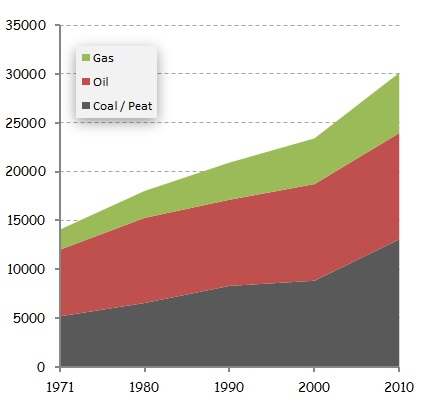
Global emissions, million tonnes CO2 from 1971 to 2010
I recently came across data relating to the potential coal resource base in just one country, Botswana, which is estimated at some 200 billion tonnes. Current recoverable reserves are of course a fraction of this amount, but just for some perspective, 200 billion tonnes of coal once used would add well over 100 billion tonnes of carbon to the atmosphere and therefore shift the cumulative total from the current 580 billion tonnes carbon to nearly 700 billion tonnes carbon; and that is just from Botswana. Fortunately Botswana has quite a small population and a relatively high GDP per capita so it is unlikely to use vast amounts of this coal for itself, but its emerging neighbours, countries like Zimbabwe, may certainly benefit. This much coal would also take a very long time to extract – even on a global basis it represents over 25 years of use at current levels of production.
This raises the question of whether a country can develop without an accessible resource base of some description, but particularly an energy resource base. A few have done so, notably Japan and perhaps the Netherlands, but many economies have developed by themselves on the back of coal or developed when others arrived and extracted more difficult resources for them, notably oil, gas and minerals. The coal examples are numerous, but start with the likes of Germany, Great Britain, the United States and Australia and include more recent examples such as China, South Africa and India. Of course strong governance and institutional capacity are also required to ensure widespread societal benefit as the resource is extracted.
Coal is a relatively easy resource to tap into and make use of. It requires little technology to get going but offers a great deal, such as electricity, railways (in the early days), heating, industry and very importantly, smelting (e.g. steel making). In the case of Great Britain and the United States coal provided the impetus for the Industrial Revolution. In the case of the latter, very easy to access oil soon followed and mobility flourished, which added enormously to the development of the continent.
But the legacy that this leaves, apart from a wealthy society, is a lock-in of the resource on which the society was built. So much infrastructure is constructed on the back of the resource that it becomes almost impossible to replace or do without, particularly if the resource is still providing value.
As developing economies emerge they too look at resources such as coal. Although natural gas is cleaner and may offer many environmental benefits over coal (including lower CO2 emissions), it requires a much higher level of infrastructure and technology to access and use, so it may not be a natural starting point. It often comes later, but in many instances it has been as well as the coal rather than instead of it. Even in the USA, the recent natural gas boom has not displaced its energy equivalent in coal extraction, rather some of the coal has shifted to the export market.
Enter the Clean Development Mechanism (CDM). The idea here was to jump the coal era and move directly to cleaner fuels or renewable energy by providing the value that the coal would have delivered as a subsidy for more advanced infrastructure. But it hasn’t quite worked that way. With limited buyers of CERs (Certified Emission Reduction units) and therefore limited provision of the necessary subsidy, the focus shifted to smaller scale projects such as rural electricity provision. These are laudable projects, but this doesn’t represent the necessary investment in large scale industrial infrastructure that the country actually needs to develop. Rooftop solar PV won’t build roads, bridges and hospitals or run steel mills and cement plants. So the economy turns to coal anyway.
This is one of the puzzles that will need to be solved for a Paris 2015 agreement to actually start to make a difference. If we can rescue a mechanism such as the CDM and have it feature in a future international agreement, it’s focus, or at least a major part of it, has to shift from small scale development projects to large scale industrial and power generation projects, but still with an emphasis on least developed economies where coal lock-in has yet to occur or is just starting.
As we head towards COP21 in Paris at the end of 2015, various initiatives are coming to fore to support the process. So far these are non-governmental in nature, for example the “We Mean Business” initiative backed by organisations such as WBCSD, CLG and The Climate Group. In my last post I also made mention of the World Bank statement on Carbon Pricing.

This week has seen the launch of the Pathways to Deep Decarbonization report, the interim output of an analysis led by Jeffrey Sachs, director of the Earth Institute at Columbia University and of the UN Sustainable Development Network. The analysis, living up to its name, takes a deeper look at the technologies needed to deliver a 2°C pathway and rather than come up with the increasingly overused “renewables and energy efficiency” slogan, actually identifies key areas of technology that need a huge push. They are:
These make a lot of sense and much has been written about them in other publications, except perhaps the second last one. Some time back I made the point that the solar PV enthusiasts tend to forget about the industrial heartland; that big, somewhat ugly part of the landscape that makes the base products that go into everything we use. Processes such as sulphuric acid, chlorine, caustic soda and ammonia manufacture, let alone ferrous and non-ferrous metal processes often require vast inputs of heat, typically with very large CO2 emissions. In principle, many of these heat processes could be electrified, or the heat could be produced with hydrogen. Electrical energy can, in theory, provide this through the appropriate use of directed-heating technologies (e.g. electric arc, magnetic induction, microwave, ultraviolet, radio frequency). But given the diversity of these processes and the varying contexts in which they are used (scale and organization of the industrial processes), it is highly uncertain whether industrial processes can be decarbonized using available technologies. As such, the report recommends much greater efforts of RD&D in this area to ensure a viable deep emission reduction pathway.
Two key elements of the report have also been adopted by the USA and China under their U.S.-China Strategic and Economic Dialogue. In an announcement on July 9th, they noted the progress made through the U.S.-China Climate Change Working Group, in particular the launching of eight demonstration projects – four on carbon capture, utilization, and storage, and four on smart grids.
Reading through the full Pathways report I was a bit disappointed that a leading economist should return to the Kaya Identity as a means to describe the driver of CO2 emissions (Section 3.1 of the full report). As I noted in a recent post it certainly describes the way in which our economy emits CO2 on an annualised basis, but it doesn’t given much insight to the underlying reality of cumulative CO2 emissions, which is linked directly to the value we obtain from fossil fuels and the size of the resource bases that exist.
Finally, Sachs isn’t one to shy away from controversy and in the first chapter the authors argue that governments need to get serious about reducing emissions;
The truth is that governments have not yet tried hard enough—or, to be frank, simply tried in an organized and thoughtful way—to understand and do what is necessary to keep global warming below the 2°C limit.
I think he’s right. There is still a long way to go until COP21 in Paris and even further afterwards to actually see a real reduction in emissions, rather than reduction by smoke and mirrors which is arguably where the world is today (CO2 per GDP, reductions against non-existent baselines, efficiency improvements, renewable energy goals and the like). These may all help governments get the discussion going at a national or regional, which is good, but then there needs to be a rapid transition to absolute CO2 numbers and away from various other metrics.