Skip to content
  • Home
  • About David
  • Twitter
  • Facebook
  • LinkedIn

David Hone

Climate Change Advisor for Shell

Hello and welcome to my blog. There's lots said about why climate change now confronts us, and what it means, but the real issue is what to do about it. Plenty is said about that too, but there's not enough discussion on the practical aspects of implementation. Focusing on energy, that's what my blog sets out to achieve.

More about me

RSS Feeds

RSS feed RSS - Posts

  • How RSS feeds work
  • My blog rules

Follow

  • View Shell’s profile on Facebook
  • View davidshellblog’s profile on Twitter
  • View davidhone’s profile on LinkedIn

My new Amazon book

Putting the Genie Back


Recent Posts

  • Temperature implications for a troubled world
  • A landmark announcement from China
  • Can a 90% reduction in greenhouse gas emissions be achieved by 2040 in the EU?
  • Different planes or new fuels?
  • Like it or not, carbon management is the future
  • Five years on from COVID-19 – a scenario perspective

I am also interested in...

  • Global Climate Change
  • Putting the Genie Back
  • RealClimate
  • Shell

Archives

  • Emissions Trading
  • Carbon capture & storage
  • Carbon price
  • Climate Science
  • UNFCCC
  • Low carbon economy
  • Policy
  • Net zero emissions
  • Renewables
  • Twitter
  • Facebook
  • LinkedIn

Shell Climate Change

David Hone – Chief Climate Change Advisor for Shell

  • Home
  • About David
  • California
  • Emissions Trading
  • Low carbon economy

Could California suffer the EU-ETS problem?

dchone July 31, 2011

As I have noted in recent posts, the EU Emissions Trading System is suffering a decline in fortune. The price has been relatively low since the onset of the financial crisis, driven in part by a decline in industrial activity linked to the recession, but also to continuous overlaying of policy by both Member States and the Commission. Examples of the latter include the UK price floor proposal and the draft Energy Efficiency Directive from the Commission.

The next cab out of the ETS rank looks to be the California cap-and-trade system. Recently Point Carbon reported that:

 “California carbon allowances (CCAs) for 2013 delivery were bid at $16.75/t this week [NB: About 2-3 weeks ago] on news that companies would not have to surrender allowances to cover their 2012 emissions, market participants said.”

California emissions in 2008 (the last full GHG inventory) were as follows:
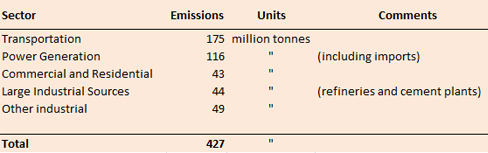
The total is 427 million tonnes against an allowance allocation in 2020 of 334 million tonnes. At least on first inspection there appears to be the necessary scarcity to ensure a robust carbon price

But California also has multiple policy approaches which operate in the same space as the cap-and-trade system. For example, by 2020 California is required to supply 33% of its electricity from renewable sources. In the transport sector, the Low Carbon Fuel Standard requires a 10% reduction in the carbon footprint of transport fuels by 2020, achieved through electrification, changes in the well-to-tank emissions of the fuel (e.g. through lowering refinery emissions) and substitution of gasoline with alternatives such as ethanol.

Many scenarios could play out here and the level of nuclear power will be critical, but these two policies alone could see emissions drop to 360-370 MT by 2020, removing much of the scarcity driving the carbon market.

Since the election of Governor Brown there is already talk of an even higher renewable energy requirement and there are other existing policies as well (Renewable Portfolio Standard, various energy efficiency standards, CHP requirements, vehicle efficiency measures).  In addition, what is not factored in here is California’s share of the overall drop in US emissions since 2008 as a result of the recession. But on the upside, at least from a carbon market perspective, is the compression of the whole trading period by one year as a result of the delay in implementation.

A back of the envelope analysis today indicates that the California system probably won’t see an allowance surplus through to 2020, nevertheless much of the apparent scarcity is removed by multiple policies operating within the cap-and-trade space. This means that the carbon market becomes a shorter term compliance mechanism rather than a longer term investment driver. It functions only as a check on the other policies.

Rather, investment is driven by mandates and standards on the back of a specific, predetermined design outcome for California’s future energy system – almost certainly a higher cost solution for the energy consumer, but with the same environmental outcome as the cap-and-trade would deliver if left to function on its own.
  • Australia
  • Emissions Trading
  • Low carbon economy

Korea and Australia dance to the same tune

dchone July 15, 2011

Apart from Australia announcing the details of its carbon pricing mechanism and eventual transition to an ETS, there was also news this week from a huge regional trading partner, South Korea. The South Korean cabinet has approved a plan to cut carbon emissions 30% below expected levels in 2020. In support of this, the government has submitted a bill to parliament that includes plans for an ETS from 1st January 2015. The bill also has a chance of passing, given that the ruling party enjoys a comfortable majority – but don’t expect this to be a walk in the park. The Korea Herald reported:

Korea outlined action plans to tackle climate change on Tuesday (12th July), breaking down reduction targets for high-emitting sectors in the medium term. The pan-governmental plan was devised to put the country’s low-carbon, green growth initiatives in motion, which President Lee Myung-bak launched in 2009 with a goal of cutting greenhouse gas emissions by 30 percent through 2020 from 2007 levels.

For the transportation sector, the target was set at 34.3 percent below business-as-usual levels. The government also aims to slash 26.9 percent from buildings, 25 percent from the public sector and 18.2 percent from industries, while saving 26.7 percent by switching to renewable electricity sources.

Under the plan, the government will multiply use of solar and wind energy, smart grid, as well as carbon capture and storage technology, which involves seizing carbon dioxide from power plants and other industrial facilities using coal and gas, compressing and sequestrating it underground or under the seabed.

It also plans to expand highly efficient facilities at residential and industrial complexes, and supplies of clean fuels such as liquefied natural gas, plastic scrap and biomass.

As for transport, the government will foster public transportation and electric and hybrid vehicles, while stepping up fuel efficiency standards for vehicles by 2015 to 140 grams per kilometer from the current 159 grams.

“We tried to draw up reasonable and fair measures to reduce emissions through collaboration between involved ministries, field research and public meetings,” the government said in a statement. “We’ll solidify Korea’s image as a leader in green growth.”

Green growth has been one of the key policies of the Lee administration as the country’s main economic force transitions from smokestack industries to high-tech.

Korea is the world’s No. 9 polluter, with annual emissions from Asia’s fourth-largest economy doubling between 1990 and 2007 to 610 million tons, slightly greater than Australia’s.

With the green growth vision, the government wants to stay at about 637 million tons through 2020, which is set to expand to 813 million tons.

By sector, the government expects the largest slice to come from industries with 56 percent of the total in 2020. Buildings came second with 22 percent, followed by transportation with 13.2 percent, agriculture, forestry and fisheries with 3.6 percent and public institutions with 2.3 percent.

To reach its goal, it has been promoting environmentally friendly investment and technologies, while establishing a comprehensive act on green growth.

But the government faced a setback as it postponed the adoption of a carbon trading scheme known as “cap-and-trade” after 2015 amid fierce opposition from industries that it would cost too much, thus hampering their growth.

Under the system, companies are required to release emissions above a government-imposed cap and to purchase extra credits from those that discharge below their quota.

“The government will strive to minimize negative impacts of emission-related regulations on the industry’s competitiveness and national economy,” it said.

Together with New Zealand, this raises the prospect of a significant carbon trading regime developing outside of Europe. What is perhaps more interesting though is how these schemes might link together in the 2020s and then how this linkage could be leveraged to generate emission reduction projects. Such an opportunity was highlighted in the recent WBCSD publication, Carbon Pricing, which I have mentioned in previous postings. In the WBCSD publication the example given was as follows:

 Today, Australia exports iron ore to Asia where it is smelted with coal to produce wrought iron and finally steel. In future years, a carbon price operating within Asian and Australian economies could encourage the development of the necessary process for the production of the steel in Australia using natural gas, where that fuel is prevalent, rather than coal, as is the case in Asia today. The transfer of allowances from Asia to Australia, assuming linked carbon trading systems, would underpin any additional emissions in that country, but overall emissions between the two would be lower, thus making the project an attractive proposition.

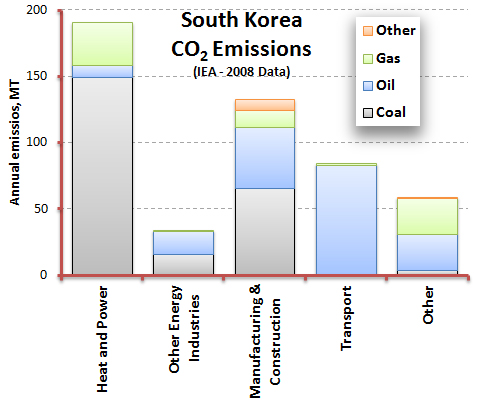
South Korea is one such economy that smelts iron ore from Australia and uses coal to do so. CO2 emissions from coal make up nearly half the emissions from the economy as a whole and fuel switching will be one of the early mechanisms implemented to reduce emissions.


The switch from coal to gas in steel making is technically possible by utilizing the DRI process (Direct Reduced Iron) and while South Korea may see such a move as a relocation of jobs, Australia would undoubtedly welcome the opportunity. Building a new plant in Australia with domestic natural gas and transferring allowances through a linked system offers an alternative to the fuel switching taking place in South Korea itself, which would require the gas to be delivered as LNG.

Don’t expect changes like this to happen just as these systems leave their respective starting blocks, but as linkages develop and international goals start to become recognized and delivered on, such optimization driven by the price of carbon becomes a real possibility.

  • Australia
  • Carbon tax
  • Emissions Trading

Australia – the “Lucky Country”

dchone July 11, 2011

Australia has long been referred to as “The Lucky Country”, originally taken from the 1964 book of the same name by social critic Donald Horne.

I can only ever remember this being used in a favourable context, given the natural resources available to the country, the weather, the relaxed lifestyle and general high level of prosperity. But the origin of the title comes from the opening words of the book’s last chapter:

“Australia is a lucky country, run by second-rate people who share its luck.”

Horne’s statement was made ironically, as an indictment of 1960s Australia. His intent was to comment that, while other industrialized nations created wealth using “clever” means such as technology driven by relentless innovation, Australia did not. Rather, Australia’s economic prosperity was largely derived from its rich natural resources. Horne observed that Australia “showed less enterprise than almost any other prosperous industrial society.”

The greenhouse gas story in Australia has been an interesting analogy to this phrase. “Lucky” Australia has grown to become one of the most emissions intensive economies, by almost any measure. But the country has long ignored this given its relatively small contribution to total global emissions. Energy use in Australia results in about 400 million tonnes of CO2 emissions per annum, or just 1.3% of the global total – this is of course because of the very small population. 

Many will argue, and have done so, that irrespective of what Australia might or might not do, its actions will not change the prospects for this global issue, at least in terms of contribution to the concentration of CO2 in the atmosphere. In one sense this is true, but if such an argument is applied universally then we end up collectively doing nothing to reduce emissions. The same argument has also played out in very big economies such as the USA, where many will comment that the US acting alone will not solve the problem as China has become the largest emitter. It is equally prevalent in sectors who claim “exemption” based on the critical nature of the service provided or the benefit of the product or service in terms of its subsequent impact on emissions.

But last weekend, as a second attempt, Australia announced its intention to begin to reduce emissions and to introduce a policy framework that would steer it towards its goals. After much national debate which I have commented on in a number of previous postings (The nature of uncertainty, Tough times in Australia for carbon, Tough choices for Australia, A carbon price for Australia), a four part framework has emerged, consisting of a carbon price, renewable energy targets, energy efficiency programmes and a focus on land-use. Of these, the carbon price debate has probably been the most heated. The end result now proposed for legislation, is a fixed carbon price that will be introduced in 2012 with a gradual transition to full cap-and-trade starting three years later.

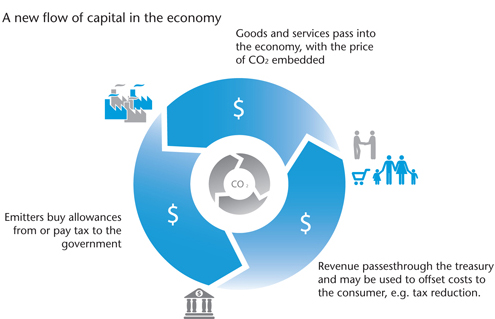
The proposal will also recycle most of its revenue back into the economy, through changes in the tax system and assistance to trade exposed industries. This is in alignment with the structure of a carbon pricing mechanism discussed in the WBCSD publication “Carbon pricing”, published earlier this year. 

Australia is now looking to change its luck, although there will certainly be more debate. The carbon price will focus minds, slowly driving Australia away from dependency on resources such as coal, requiring both the enterprise and innovation that Donald Horne advocated for back in the 1960’s.  So “the lucky country” moves on, but the more it moves in this particular direction, the luckier it will undoubtedly get.

  • Climate Science

Back to basics on climate science

dchone July 1, 2011

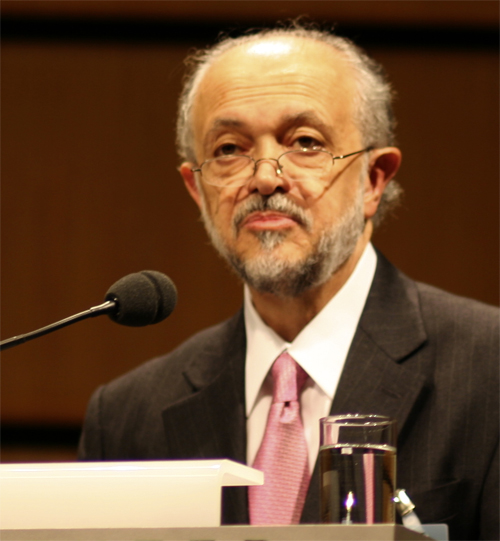
Last week I had the privilege to attend an MIT forum and listen to the keynote address given by Nobel laureate Mario Molina. The subject of the address was the issue of conveying an understanding of the science of climate change to the general public. Professor Molina won the Nobel Prize and is best known for his work in identifying the role of chloro-fluorocarbons in the destruction of the ozone layer. Unlike the current state of paralysis that seems to be encompassing the international talks on climate change the Montreal Protocol, which underpins the global reduction in the use of CFCs, was negotiated with relative ease. But the nature of the problems are very different.

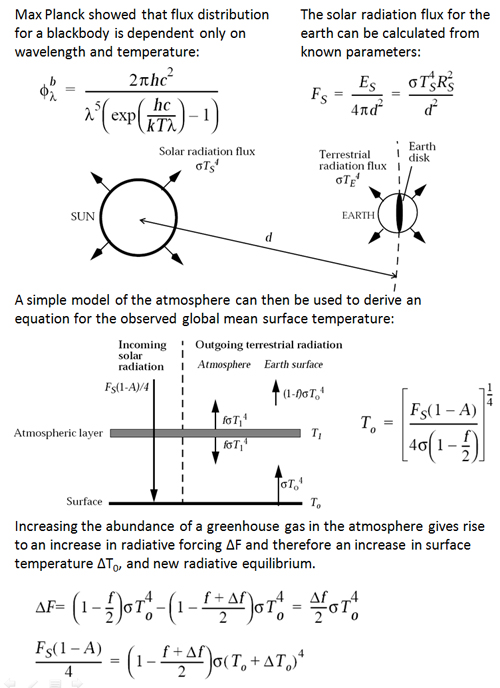
Turning back to the keynote address, Molina lamented on the poor job that scientists had seemingly done in conveying what is, in his view at least, a relatively simple and well understood physical phenomena governed by a set of known equations. In addressing the audience, he asked quite simply in his soft understated tone “What is it about Planck’s Law and the Boltzmann constant that is now in dispute?”. A similar question was asked for Kirchhoff’s Law and the other equations which can be used to calculate the observed temperature of the atmosphere, all of which have been developed over the last century and can be found in books such as Introduction to Atmospheric Chemistry, by Daniel J. Jacob, Princeton University Press, 1999. Most if not all of these physical laws were discovered for reasons unrelated to atmospheric chemistry, but of course can be applied to this discipline as they also can to explain a multitude of other physical phenomena on display in the world we inhabit.

In fact none of this basic physics and chemistry is in dispute – if it were then we shouldn’t be surprised that a multitude of the devices we use in everyday life, from iPad’s to microwave ovens, wouldn’t work as expected – or in reality wouldn’t exist in the first place. All depend on the same physical principles that also make up our understanding of the workings of the atmosphere and the impact of a change in its composition.

Yet time and again we are confronted by commentators claiming the issue is a hoax and the science is fraudulent. This played out again in Australia over recent days as British climate sceptic Christopher Monckton toured the country and delivered a series of lectures.

Professor Molina didn’t have a solution to this problem, other than to recall the successful transition from initial scepticism to eventual action and international agreement on CFCs. He noted that this was to some extent down to the role of business as new refrigerants were developed to replace CFCs. Unfortunately the climate problem is an order of magnitude or two more complex than the ozone layer issue, given our near total reliance on fuels and industrial processes which emit CO2. The issue also runs headlong into the sensitive issues of energy dependence, human development, economics and national security, further complicating the solution set.

But we could at least start by recognising that physics and chemistry are part of our lives and that the society we have built depends totally on the laws, constants and algorithms that have developed from these disciplines, which includes our understanding of the processes in the atmosphere. Then perhaps there is room for a more grown up debate on the way forward.

  • Cancun
  • Greenhouse gases
  • Low carbon economy

The USA on target? Yes, according to the Administration!

dchone June 23, 2011

It has been an interesting week for climate change news, with the IPCC releasing its full report on renewable energy, the European Commission moving ahead with energy efficiency legislation, very little happening at the UNFCCC talks in Bonn and of course the battle over carbon pricing continuing in Australia. In scanning the Australian media I spotted an insightful interview with the United States Ambassador to Australia. In the interview, Ambassador Bleich argues that the USA is on track to meet its 2020 greenhouse gas target (17% below 2005 levels) because of the breadth of activity across the economy in transforming the energy system.

 THE US ambassador to Australia says America is pulling its weight in international efforts to reduce greenhouse emissions, contrary to suggestions a carbon tax would see Australia acting ”ahead of the rest of the world”. In an interview with the (Sydney Morning) Herald, Ambassador Jeff Bleich said the idea that America was lagging was “not accurate at all” and it was “absolutely realistic” to believe the US would meet its target of a 17 per cent reduction in emissions by 2020, based on 2005 levels.

“The US is taking dramatic action, if you look at the largest investment in history in energy transition, the major regulatory reforms for the largest emitters and consumers of energy, the focus on the dirtiest emission technologies used by power plants and vehicles … we are moving on a very aggressive regulatory effort,” he said. “… there’s absolutely no question the United States has been doing a tremendous amount over the last two years … and going forward the President has said we need to double what we are doing because that is good for our economy.”

The Californian emissions trading scheme, due to start next year, could also have “dramatic effects”, for that state and potentially on a broader scheme for the western states of the US and Canada, he said. Although President Obama had been clear he preferred a national cap and trade scheme, when that was not successful in Congress he had moved to different approaches. These had not put the United States at a competitive disadvantage with major trading partners because China, Europe and others were taking action as well, nor had US companies in Australia expressed concern that a carbon tax would disadvantage their business here.

The Australian Industry Greenhouse Network has cited figures from the US showing that because of the impact of the financial crisis, US emissions were not scheduled to return to 2007 levels until 2027, suggesting that the US emissions reduction target was now easier and no longer required an “equivalent effort” to Australia’s emissions reduction target of a 5 per cent cut based on 2000 levels.

Ambassador Bleich said that while the financial crisis may have had an impact on emissions, the measures being taken by the administration were also having a real impact.

The recent Productivity Commission report said the US was spending a little less than Australia on reducing emissions as a percentage of GDP and was abating less from its electricity sector, but Ambassador Bleich said the report had provided more evidence that major emitters were all acting.

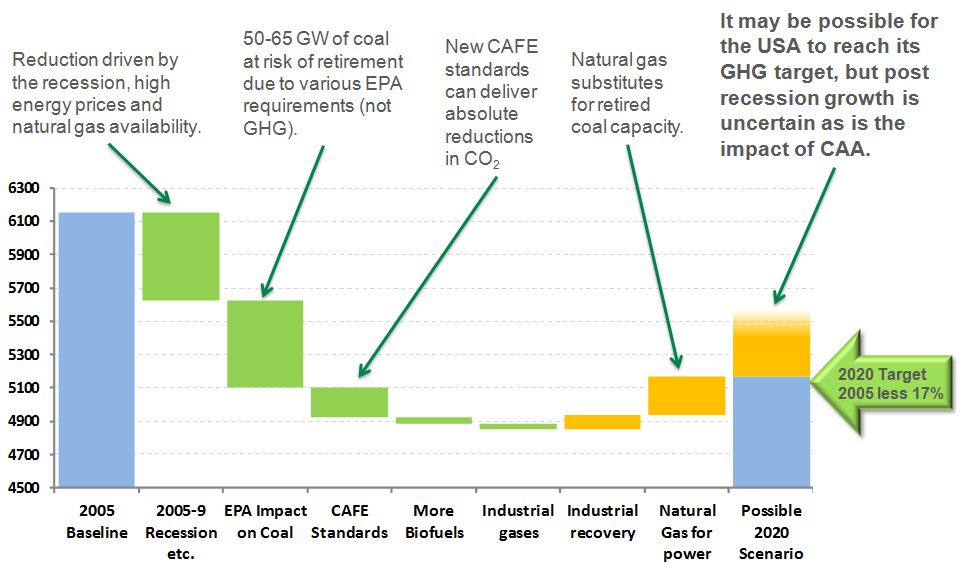
I have discussed this before, but it is worthy of a revisit. There is no question that US emissions have fallen in part as a result of the recession, but the increasing availability of natural gas and generally higher energy prices causing consumers to think about energy use are also having an impact. Furthermore, a variety of renewable energy programmes (but mainly wind) are filling in capacity gaps in the power market and the Bush Administration bio-fuel mandates are having an impact in the road transport sector.

I recently revised my own analysis of US emissions for a conference and developed the following summary picture:

In terms of progress from today, the two big ticket items remain natural gas substitution for coal and the impact of CAFE standards in the transport sector. Emission and water regulation (not including GHGs) under the Environmental Protection Agency (EPA) could result in a substantial portion of US coal fired power generation shut down by 2020. The displacement of up to 70 GW of coal fired generation capacity would require about 7.8 Bcf/day of natural gas or some 4 years of production increase, assuming the current production trend is maintained. Even if the annual increase was half the current trend, sufficient additional production would be available for such large scale substitution over the period 2012-2020.

The real unknown of course is the possibility of an emissions upswing over this decade as the economy shifts back into full gear.

US success in meeting the 2020 target could profoundly affect the broader discussions on reducing CO2 emissions, both in the USA and more widely. After 2020 we might we see more acceptance of CO2 measures on the basis that emissions had fallen, it hadn’t damaged the economy or society, so “we can then do more”. But it could be a double edged sword, with complacency creeping in on the back of the argument that the market has responded and CO2 is taking care of itself, so there is no need to worry about it.

  • Emissions Trading
  • Europe
  • Policy

The case for a set-aside in the EU ETS

dchone June 19, 2011

One of the big issues that has been debated in the EU since before the ink was even dry on the 2008/2009 Energy and Climate package (EU ETS Directive, CCS Directive, Renewable Fuel Directive etc.) is whether the EU emission reduction target should be adjusted up to 30% from the base 20% originally agreed. Formally, the shift to a 30% target is linked to the nature of an international agreement on climate change. For example, had Copenhagen delivered a new framework within which real and meaningful reduction targets were agreed, there would have been a fairly swift move on the part of the EU to 30%. But of course that didn’t happen.

Rather, we are almost nowhere on the international discussion and in the meantime the EU, like most of the rest of the world, has suffered the impact of the global financial crisis. As is widely recognized, this has resulted in a significant dip in emissions in 2008-2010 because of a real drop in industrial output, resulting in a likely surplus of Phase II ETS allowances and a much lower carbon price going into Phase III (2013-2020) than was ever envisaged. Of course this means that delivery on the 2020 target has become much easier for the EU, but also that much less of the emissions reduction through major change hoped for in the power and industry sectors would actually take place. Put simply, this wasn’t the plan that EU governments had signed up to. They wanted real and visible change, not just compliance with a 2020 target.

The first reaction by many has been to look on the policy shelf, see the 30% option sitting there and propose that this be implemented. The debate over such a move has been vigorous, splitting the ranks of businesses, governments and even non-government organisations. But arguably, there are reasons to consider a change, although a more focused approach is probably what is needed.

The real problem lies in the ETS itself which covers about half the EU emissions, but most of heavy industry and power generation. With a depressed carbon price and the EU ETS stuck at its -21% target (its share of the EU’s overall -20% goal) two things have happened – apart from the lack of emission reduction projects;

  • Some member states have begun to take unilateral action to ensure more happens in their domestic sectors and notably power. The most current example is the proposal by the UK Government to introduce a floor price in the ETS, i.e. a UK carbon bubble. Apart from the impacts that I described in a recent post, a recent report from CDC Climate Research points out that the move also shifts auction revenue from continental EU member states to the UK. This may result in similar policies being developed in other jurisdictions, further undermining the ETS itself. The more the ETS is stifled, the less economically efficient is the reduction pathway in the EU and the more it will cost both business and the consumer.
  • The Clean Development Mechanism (CDM) of the Kyoto Protocol has started to dry up in terms of demand for CERs. It isn’t just the low price doing this, but also the EU limits on CER intake in Phase III while the target remains at 20%. With the CDM being the only substantive component of the nascent global carbon market, problems with it mean big problems for the further development of carbon trade and the carbon market more generally. Of course this isn’t helped by the lack of action in the UNFCCC discussions, but the situation in Europe is just adding to the misery for the CDM.

A potential solution to both these problems is to remove some of the EU-ETS allowances in Phase III and set them aside, either permanently or in a carbon bank for Phase IV and later. This would bolster the carbon price and potentially make mechanisms such as the UK floor price irrelevant which in turn lowers the pressure for other Member States to reciprocate. A set-aside could also be delivered with some changes in allowed CER in-flow, thereby supporting the international carbon market as well.

The set-aside is the proposal on the table today and one which is worthy of real consideration, rather than just a knee-jerk “no” that might be expected from some business groups and Member States. Exactly how many allowances need to be removed, when and by what mechanism have yet to be defined. At a minimum, we should better understand the nature of the economic recovery that is now getting going (albeit significant problems remaining with Member State debt), but by early next year the situation should be much clearer and in any case there is plenty of work to do this year building the case.

  • Australia
  • Climate Science
  • United States

Weird weather or just chaos as usual?

dchone June 10, 2011

By many accounts 2011 has been a year of weather extremes and some commentators have used certain events to highlight the risks associated with climate change. While there is increasing evidence of unusual global weather events, should we just assume that every disaster is a sign of things to come? I find, given my job title, that people do ask me about these associations, so it is perhaps time to put some thought to this and at least give my perspective on the issue.

For me, two particular series of events have stood out in 2011, the very extensive flooding in my home country of Australia and the recent upsurge in tornado activity in the USA.

There are also plenty of other events in recent times – for example, “Snowmaggedon” in the US North East in January 2010, the Australian bushfires of 2009 and the intense heat wave of the same period and going back a bit further the European  heat wave of 2003 during which all-time record temperatures were reached in many cities. Although Australia has a long history of bushfires, much of that part of Southern Australia also broke all-time temperature records in the days prior to the fires.

As the world warms the convective processes in the atmosphere could be expected to increase simply because of the additional energy into the system. Similarly, global precipitation (rain, snow, ice) should increase as the hydrological cycle speeds up given the overall higher level of moisture held in the atmosphere. Estimating global precipitation is a relatively new field of science, but there is some evidence that precipitation levels may be increasing. The US National Climate Data Centre said early this year that 2010 equaled the hottest on record – less noticed was their calculation that global rainfall levels were the highest since at least 1900. 

 Returning to the events of 2011, it is perhaps too easy to assume that this is climate change on show. In fact it probably isn’t. Severe tornadoes have been recorded in the USA since regular records were first kept and even the coincidence of floods in Australia and bumper tornado years in the USA isn’t a one-off event:

2011

  • February 2011: Record flooding across much of Queensland.
  • April/May 2011: Super Outbreak of tornado activity in the USA, with high death tolls in Tuscaloosa and Joplin in particular.

 1974

  • January 1974: Widespread major flooding occurred in almost all areas of the State during this month. Few areas had no flooding at all. One of these was the Dumaresq River upstream from Goondiwindi , where at one stage during the month , water was released for irrigation. Record flooding occurred in the Bulloo , Paroo , middle and lower reaches of the Flinders , Norman , Gilbert , Cooper , Diamantina , Georgina and Eyre rivers and creeks as well as Nerang, Brisbane City metropolitan , upper Brisbane, Bremer , Warrill and Logan rivers and creeks, the latter associated with Cyclone “Wanda”.
  • April 1974: The Super Outbreak of tornadoes of 3–4 April 1974 remains the most outstanding severe convective weather episode of record in the continental United States. The outbreak far surpassed previous and succeeding events in severity, longevity and extent. The death toll was over 300.

 1936

  • January – March 1936: In the period 6th to 15th January many western rivers flooded, especially in the north-west and south-west. Flooding was heavy in the Cloncurry-Mt Isa districts. The Cloncurry River reached the highest known level and the Leichhardt River was the highest for 20 years. There were big floods in the Burke River at Boulia where homes were partly submerged and stock losses reported. The Barcoo River was over the bridge at Blackall. Rail lines were submerged in several districts and traffic seriously disorganised. Local flooding occurred in a few eastern districts. Rail wash outs occurred between Bowen and Proserpine. A man drowned near Charters Towers and another in the Bell district. From February 14th and 20th there was extensive flooding in coastal areas between Cooktown and Mackay. Some serious inundations occurred especially in the Innisfail district where considerable damage was reported to crops and roads, and a lad drowned.
  • April 1936: The 1936 Tupelo–Gainesville tornado outbreak was an outbreak of seventeen tornadoes that struck the Southeastern United States from April 5 to 6th, 1936. Approximately 436 people were killed by these tornadoes. Although the outbreak was centered around Tupelo, Mississippi and Gainesville, Georgia, other destructive tornadoes associated with the outbreak struck Columbia, Tennessee, Anderson, South Carolina and Acworth, Georgia. Severe flash floods from the associated storms also produced millions of dollars in damage across the region.

1936, 1973-74, 2010-2011 all correspond to a strong La Nina phenomena in the Pacific Ocean. There are probably other such combinations, the above is not meant to be a comprehensive analysis.

With regards tornadoes in particular, a colleague of mine who is very well versed in climate science offered a useful perspective. Tornadoes are the result of two interacting phenomena – which perversely are trending in opposite directions.  First, there is convective energy (which is increasing as the atmosphere warms) – the major source in this case being the warm sea water in the Gulf of Mexico.  But more is needed to form tornadic super cell thunderstorms – so second is sufficient wind-shear, giving rise to local rotation (meso-cyclone formation). This wind-shear is connected to the winds aloft, i.e. the strength of the polar jet-stream, which in turn is tightly connected to the temperature contrast along the polar front (at it is greatest in winter and spring).  In all climate models this temperature gradient declines over time because polar areas warm up faster than the (sub)tropics. How the combination of these two drivers will end up is highly uncertain. The same also applies to mid-latitude storms in general.

What caused the mayhem in the US?  The combination of a warmer than average Gulf of Mexico and a relatively cool spring in southern Canada and the Northern US created ideal conditions for violent tornado activity.   Secondly there was awful luck – Tuscaloosa and Joplin received the direct impact of EF4/EF5 tornadoes.

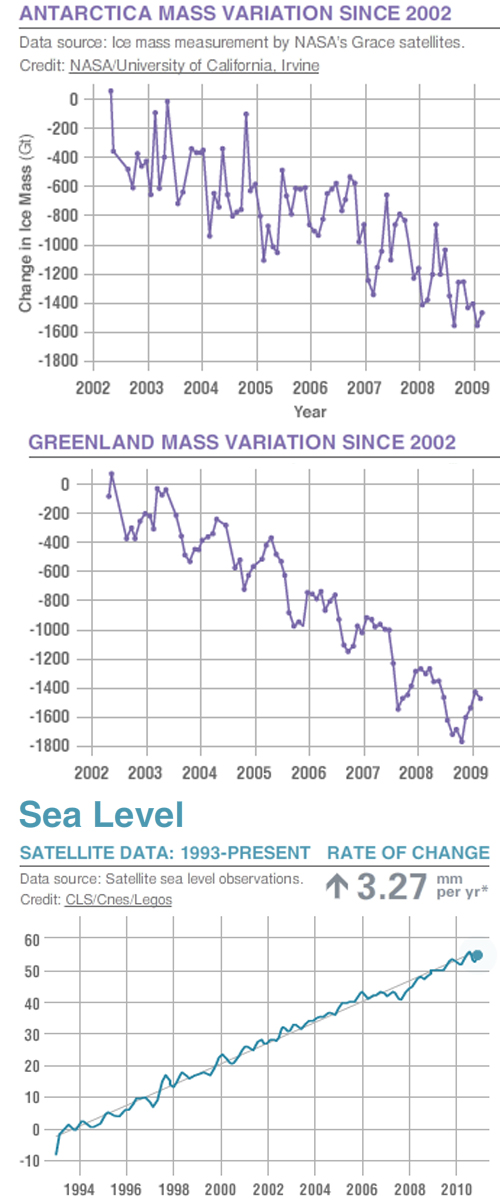
Meanwhile, the more clear-cut effects of a warming world are progressing. Arctic and Antarctic ice is declining and sea level is rising. Perhaps the Roman analogy is that while we are distracted by Tempestas flying overhead, Neptune has been knocking at the door and is now in the building.

  • Carbon capture & storage
  • Europe
  • Policy

Down to business in Bonn

dchone June 6, 2011

Over the next two weeks the national negotiating teams to the UNFCCC will meet in Bonn to continue the discussions on a global agreement and to review a number of technical issues relating to the negotiations.

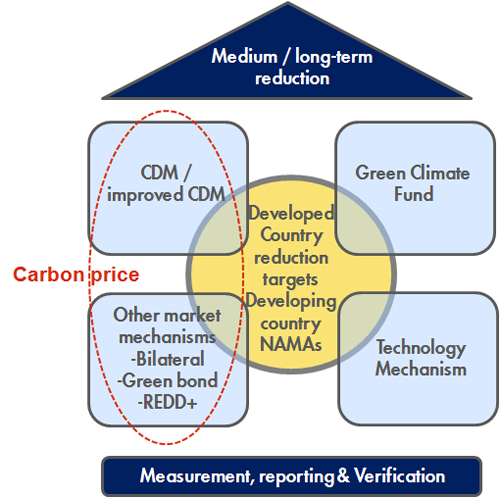
As the process rolls on, some shape is beginning to emerge with the  structure of the post-Kyoto international agreement for emissions mitigation looking increasingly like “pledge-and-review”. This will see each developed country (or region in the case of the EU) offer a specific reduction target and developing countries, who may also indicate an emissions trajectory, offering a series of national action plans  (NAMA or Nationally Appropriate Mitigation Action) related to energy and emissions management. The agreement will also comprise a number of fit-for-purpose building blocks including a climate fund, a technology mechanism, market based mechanisms and the essential support of measurement, reporting and verification (MRV). These building blocks are particularly targeted at developing countries to assist in the finance of projects and support the underlying technologies involved.

Although much remains to be defined and the transition from a “Kyoto world” to a “pledge world” is still very contentious, this basic structure now seems to be the way forward. In parallel with this process, there is an active business community seeking a say and a role in what could become the major investment of the 21st Century, the reshaping of the global energy system. Yet no formal role exists for business in this process and although many business people will be in Bonn with “observer status”, their impact will likely be minimal at best. These days business turns up largely to try and understand what is actually going on, especially given what is at stake.

The process of setting targets and crafting an agreement for the future is and should be the role of government, but there is nevertheless a valid role for business to play in shaping the energy investment landscape other than just turning up with cranes and accepting factory orders when a project is finally given the go-ahead.

Within the EU a comprehensive policy framework has been required to begin to deliver the necessary emission reductions and there has been considerable business involvement. One particular example stands out which could be the model for business involvement more widely. In support of the EU need to see CCS develop more rapidly (an “EU NAMA” in effect), an advisory body was created to involve business, academia and civil society – the European Technology Platform for Zero Emission Fossil Fuel Power Plants (ZEP). ZEP (of which Shell’s Executive Vice-President for CO2, Graeme Sweeney, is the current Chairman) serves as advisor to the European Commission on the research, demonstration and deployment of CCS. ZEP brought a tight business focus onto this “EU NAMA” and charted a way forward, using the tools available within the EU policy framework (e.g. EU-ETS, EU Strategic Energy Technology Plan, EU Recovery Budget). Although ZEP is formally a technology platform, its mission extends far beyond a focus on the technology itself. As an advisor to the EU, it has been instrumental in the creation of the core elements of the EU CCS programme;

  1. A clear goal to develop some 10 commercial scale CCS projects across the EU as a demonstration of the effectiveness of CCS and the economics of the technology.
  2. A funding mechanism to support the implementation of CCS demonstration programme and bridge the gap between the early cost of CCS and the prevailing carbon economics in the EU.
  3. A legal framework for the geological storage, measurement, reporting and verification of carbon dioxide.
  4. A process for the submission and selection of projects eligible for the funding mechanism. 
  5. A technology research and development programme which supports the longer term deployment of CCS technologies in the EU. This is a sub-set of the EU Strategic Energy Technology Plan (SET Plan).

ZEP is funded jointly by the EU and its members and has a small secretariat to administer its operations and run the communication programme. It holds regular coordination meetings, council meetings and an annual general assembly. A number of technical and policy work stream teams meet as necessary to develop ZEP advisory positions.

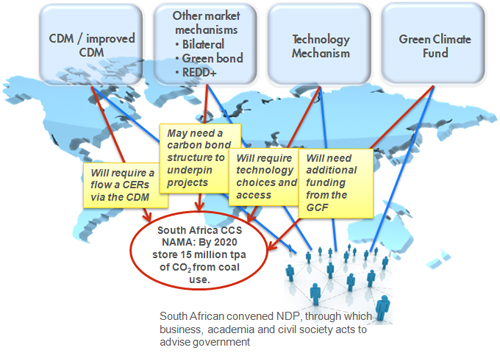
Such an approach within the UNFCCC framework and applied to NAMAs would address the dual coordination issues of the use of implementation tools (Green Climate Fund, CDM, Technology Centre etc.) available to a NAMA and the regional infrastructure development associated with a number of major projects.

An individual emerging-economy NAMA (in the context of this discussion a NAMA represents a large scale implementation of technology based projects, e.g. a number of offshore wind farms, large scale application of CCS, with the goal to drive significant emissions reduction within a given country) which focuses on the right hand side of the abatement curve will require technology access and development, early demonstration then larger scale deployment, funding to bridge the required carbon price, proposals for project submission and clear communication of all the above. Each NAMA, or potentially a regional group of NAMAs, should be supported by a NAMA Development Platform (NDP) to perform the necessary coordination role. This would be funded primarily from the technology mechanism, but also with business contribution. At a minimum, the NDP would act in an advisory capacity to government with regards implementation. Its membership would include business, academia, civil society and civil servants from relevant national ministries (e.g. Department of Energy).

We shouldn’t imagine that all this will be done in Bonn, but a start could be made. In particular, there should be clarity from the UNFCCC that the business role must go beyond observer status at meetings or “special invitations” to contribute via ad-hoc roundtables and interactions. An immediate step would be to give parties the opportunity to be exposed to the proposals of businesses through in-session workshop(s) and/or facilitate meetings between businesses and the key negotiating groups (G77, Cartagena, Umbrella, etc.). The “side event” process (the opportunity to hold formal presentation sessions in side rooms at the conference venue) is not serving the business community well.

For further discussion on the above you may wish to download the document “Structural Approcahes to Emissions Mitigation and the Role of Business”.

  • Electricity
  • Transport
  • United Kingdom

An electric Hummer in London – sort of!!

dchone June 1, 2011

Saturday afternoon in Bond Street is a great place to see all manner of Aston Martins, Maybachs, Lamborghinis and just possibly a Bugatti Veyron. But the car that was turning heads last Saturday was a downsized electric Hummer. In fairness this isn’t quite a car, the website refers to it as the MEV HUMMER HX™ , the only proportionally correct licensed resort vehicle on the market. But it was still turning heads.

  • Australia
  • Canada
  • Carbon tax

The nature of uncertainty

dchone May 27, 2011

As the debate continues in Australia with regards the implementation of a carbon price, the issue of investor uncertainty has risen up the agenda. A recent interview conducted by ABC (Australian Broadcasting Corporation) illustrates the point:

One of Australia’s largest home and business electricity suppliers has warned that household power bills will double in six years after a carbon price is introduced and uncertainty over its implementation might lead to power shortages.

The gas and electricity giant’s chief executive said uncertainty over what the long-term carbon price might be has stalled capital investment in the industry and halted construction of new power stations. “Capital is not being invested so we haven’t seen new power stations built,” the CEO told ABC TV today.

Electricity regulator Australian Energy Market Operator (AEMO) had forecast shortages of baseload power for Queensland in 2013 and 2014, with Victoria and NSW experiencing shortages in 2015 and 2016, he said. “Given the timeframe for building new power stations, we’re concerned that we need that certainty today so we can build power stations to meet that coming gap in the market,” the CEO said.

He said that gap had resulted in electricity prices rising by 40 per cent in the past three years as a result of network investment. Rising fuel and gas prices would cause them to increase by another 30 per cent over the next three years, the CEO said. The mooted carbon tax of between $20 and $25 a tonne of emissions would not change industry behaviour but would double electricity bills for households over six years given the 30 per cent rise, he said.

Without wanting to comment on any of the figures in the interview, it is nevertheless clear that uncertainty surrounding the implementation of policy is a problem for some, but should it be?

When it comes to power generation on a national scale, arguably the uncertainty question is about the exact nature of the policy rather than the existence of carbon policy at all. Although some will still choose to disagree, there really is very little uncertainty around the need to reduce CO2 emissions, so it is much more about how and when rather than if.

The “when” question is perhaps less uncertain than we might imagine. In the context of major power projects with planning, approval and construction periods of up to ten years, exposure to a carbon price during the operational lifetime of the facility (i.e. the 2020s and 2030s) becomes a near certainty. Although there is concern as to the lack of policy development in key regions today, it is also true that in the last ten years there has been a spectacular shift in the policy agenda. Carbon markets are a reality, global carbon trade exists, carbon targets are the stated goal of dozens of economies and most financial institutions now operate carbon business units of one sort or another (from trading to analysis). By 2020 and beyond, as the environmental picture becomes clearer, policy implementation will likely accelerate, even if it still isn’t sufficient to address the issue head on. So the working assumption should be that a carbon policy framework will be in place during the operational life of a project just starting out today.

So the real issue is “how” (in actual fact “how much”) – i.e. what will the policy look like and what sort of price signal will it send? This was probably at the root of the decision by a number of coal fired generators to actively engage in the formulation of US cap-and-trade policy in 2009 and 2010 – it wasn’t a burst of environmental enthusiasm that brought them to the table, but the sobering reality of a regulatory future that might be created without their input. Many companies now address this aspect of uncertainty with assumed carbon prices, as is the case in Shell today. From a planning perspective looking out 10-20 years, the actual shape of the policy isn’t that important, the key issue is the carbon price it might deliver. Even this can be picked apart based on signals from legislators today and arguments put forward by academia. For example, it is clear from signals in the EU and the UK that in the EU-ETS covered sector the desired outcome is a noticeable shift in the type of generating capacity, so we therefore shouldn’t imagine that a price of €5-10 will somehow suffice. Equally, there are enough technology options in play at the moment to offer significant emission reduction opportunites below €100 per tonne of CO2.

Although it all looks messy today, there is reason to believe that this issue is far more certain than it appears. Even in Australia, both parties now have carbon price policies of some sort whereas neither really did ten years ago. In Canada, there is the proposed moratorium on unabated coal which certainly injects a carbon price into the power sector and in the USA the progressive implementation of rules under the Clean Air Act may well persuade legislators to look again at a more comprehensive approach. Even if they don’t the CAA alone delivers a pretty powerful signal.

Of course, once governments start to collect significant revenue from carbon pricing policies, certainty abounds.

Posts pagination

Previous 1 … 39 40 41 … 54 Next
Shell Climate Change
Contact / Proudly powered by WordPress Theme: Booklet.
 

Loading Comments...